Introduction
Summer
brings sunshine, vacations, and long outdoor days — but it also brings a set of
oral health challenges that most people never see coming. One of the most
underrated summer dental concerns is gum disease. While we often associate gum
problems with poor brushing or diet, the rising temperatures of summer can
quietly accelerate gum disease without you even realizing it.
In
June & Family Dental Clinic, we see a noticeable uptick in patients
reporting swollen, bleeding, or sensitive gums during the summer months. Is it
a coincidence — or is the heat making things worse? The short answer: yes, heat
can worsen gum disease. And here is exactly why.
What Is Gum Disease?
Gum
disease, clinically known as periodontal disease, is a bacterial infection of
the tissues that support your teeth. It progresses in two stages:
•
Gingivitis:
The early, reversible stage where gums become red, swollen, and may bleed while
brushing.
•
Periodontitis:
The advanced stage where infection spreads below the gum line, damaging the
bone and connective tissue holding teeth in place.
Left
untreated, periodontitis can lead to tooth loss, bone deterioration, and has
even been linked to systemic health conditions like heart disease and diabetes.
How Summer Heat Affects Gum
Health
1. Dehydration Reduces Saliva — Your Mouth's
Natural Shield
When
temperatures soar, your body loses water rapidly through sweat. If you are not
replacing fluids adequately, dehydration sets in — and your mouth is one of the
first places to show the effects.
Saliva
is your mouth's natural defence system. It:
•
Neutralizes
acids produced by bacteria
•
Washes away
food particles and debris
•
Contains
antimicrobial proteins that fight harmful bacteria
When
saliva production drops due to dehydration, bacteria multiply unchecked. This
creates the perfect environment for gum-inflaming plaque and tartar to build up
faster than usual — directly worsening or triggering gum disease.
2. Sugary Summer Drinks Feed Harmful Bacteria
Cold
drinks are a summer staple — lemonade, iced teas, fruit punches, sports drinks,
and sodas. Unfortunately, these drinks are loaded with sugars and acids that:
•
Feed the
bacteria in your mouth that cause gum inflammation
•
Lower the pH
of your mouth, softening gum tissue and enamel
•
Cause
"sugar spikes" in oral bacteria activity throughout the day
Even
so-called "healthy" options like fruit juices and coconut water
contain high levels of natural sugars that can harm gum health when consumed
frequently.
3. Increased Physical Activity Means Mouth
Breathing
Summer
means more outdoor sports, swimming, cycling, and exercise. During intense
physical activity, people naturally shift to mouth breathing — which
dramatically dries out the oral cavity. A dry mouth is a vulnerable mouth:
bacteria thrive, gum tissue becomes irritated, and existing inflammation
worsens.
4. Diet Changes and Increased Snacking
Summer
often disrupts regular eating routines. BBQs, beach snacks, and late-night
outdoor gatherings mean more frequent eating — and more exposure of your gums
to sugars, acids, and food particles throughout the day. Without proper rinsing
or brushing after each episode of eating, this creates prolonged bacterial
activity against your gum tissue.
5. Heat Promotes Bacterial Growth
Warm
and moist environments are ideal breeding grounds for oral bacteria. The heat
of summer, combined with the humidity inside your mouth, can accelerate the
reproduction of bacteria in plaque. This means gum inflammation can develop or
worsen faster during warmer months than in winter.
Warning Signs of Worsening Gum
Disease in Summer
Watch
out for these red flags, especially during summer months:
•
Gums that
bleed when brushing or flossing
•
Red,
swollen, or tender gum tissue
•
Persistent
bad breath that doesn't improve with brushing
•
Gums pulling
away from the teeth (gum recession)
•
Tooth
sensitivity — especially to cold summer drinks
•
Loose teeth
or a change in bite
If
you notice any of these signs, do not wait. Early intervention can reverse
gingivitis completely and prevent progression to periodontitis.
How to Protect Your Gums This
Summer
•
Stay
Hydrated: Drink at least 8–10 glasses of water daily. Choose water over sugary
or acidic drinks whenever possible.
•
Rinse After
Eating: After meals or snacks, rinse your mouth with water to remove sugar and
food debris.
•
Maintain a
Consistent Brushing Routine: Brush twice daily with a soft-bristled toothbrush
and fluoride toothpaste.
•
Floss Every
Day: Flossing removes the interdental plaque that causes gum disease — don't
skip it.
•
Use an
Antibacterial Mouthwash: A quality mouthwash reduces oral bacteria and helps
protect gum tissue.
•
Limit Sugary
Drinks: opt for water, unsweetened herbal teas, or diluted juices.
•
See Your
Dentist: Schedule a summer dental checkup to catch any early signs of gum
disease before they worsen.
When to See a Periodontist
If
your gum symptoms persist despite good at-home care, it's time to see a
specialist. At June & Family Dental Clinic, our periodontics team offers:
•
Professional
deep cleaning (scaling and root planning)
•
Gum disease
assessment and staging
•
Laser gum
therapy for advanced cases
•
Ongoing
maintenance programs to prevent recurrence
Frequently Asked Questions
Q1: Can hot weather directly cause gum disease?
Heat does not cause gum disease
on its own, but summer conditions — dehydration, diet changes, and increased
bacteria — significantly worsen existing gum problems and make healthy gums
more vulnerable.
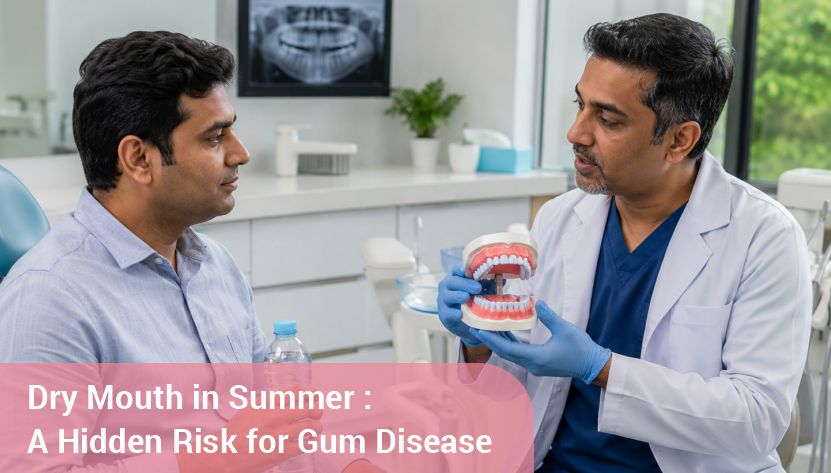
Q2: Is tooth sensitivity to cold drinks related to gum disease?
Yes. When gums recede due to
periodontal disease, the sensitive root surfaces of teeth become exposed,
causing sharp sensitivity to cold beverages — a common summer complaint.
Q3: How often should I visit the dentist for gum health?
Patients with existing gum
disease should visit every 3–4 months. Healthy patients should visit twice a
year for professional cleaning and monitoring.





.jpg)




.jpg)